What Is an Electrical Panel? A Novice's Guide
Most people walk past the gray metal door in their corridor or garage without a doubt. That cabinet is not simply a box of switches. It is the central nervous system of a home's power, the location where electricity gets portioned out, protected, and shut down when something goes wrong. If you want to comprehend your home, it helps to comprehend the electrical panel.
I have opened numerous panels in basements and energy spaces, and the same questions always show up: What am I looking at? Just how much power do I have? Why does that breaker keep tripping? Can I add a cars and truck charger? The answers are uncomplicated once you grasp the parts, the flow of power, and the limitations of the system.
What an Electrical Panel Really Does
Utility power reaches your home through service conductors that link to a meter, then to the primary service disconnect, which is frequently incorporated into the electrical panel. Inside the cabinet are breakers that segment that inbound power into circuits, each with an assigned purpose: cooking area outlets, a furnace, lights, a dryer, maybe a hot tub.
The electrical panel carries out 3 jobs at once. It houses the primary detach so you can eliminate power to the structure in an emergency situation. It limits current to safe levels utilizing breakers that journey under fault or overload conditions. It organizes circuitry so each circuit can be isolated, identified, and serviced without disturbing the remainder of the home.
When individuals call it a breaker box or circuit box, they are referring to the exact same idea across various eras. Older homes utilized fuses that melt when strained. Modern electrical panels utilize circuit breakers, which trip and can be reset. Both protect conductors from overheating, but breakers add electrical panel replacement benefit and better diagnostics.
The Path of Power, Start to Finish
Power begins at the transformer on the street. For normal North American homes, two hot legs and one neutral get here from the utility in a setup called split-phase 120/240 volts. Those conductors travel through the meter, then into your electrical panel's primary lugs or primary breaker.
From the main breaker, the panel's 2 vertical bus bars disperse power. Single-pole breakers clip onto one bus bar to supply 120-volt circuits, like lighting and basic receptacles. Double-pole breakers span both bars to provide 240-volt circuits, such as a variety, hot water heater, or EV charger. The neutral bar returns current from 120-volt loads, and a separate ground bar ties all devices grounding conductors together and bonds to the grounding electrode system, which connects to earth by means of ground rods or other electrodes.
That split-phase plan describes some mysteries. If half your house goes dark, but some lights still work, among the hot legs might be out due to an energy problem or a stopping working main breaker. If a double-pole breaker journeys when a big load starts, it could be responding to imbalance or a brief on one side. Comprehending the two buses and how breakers link to them assists you fix with less guesswork.
Anatomy of an Electrical Panel
Open the panel door and you will see breakers and a labeling directory. Get rid of the dead front cover and you will see more, however that is work for qualified hands only. The major elements are:
-
Main breaker. The big switch that shuts down power to the whole panel. Typical ratings are 100 amps for older homes, 150 or 200 amps for contemporary builds, and 225 to 400 amps for big or all-electric homes.
-
Bus bars. Metal bars that carry the 2 hot legs down the panel. Breakers snap into these bars. Neutral and ground bars run along the sides for returning present and equipment grounding.
-
Branch breaker. Single-pole or double-pole devices that protect individual circuits. Popular sizes include 15 and 20 amps for basic circuits, and 30, 40, 50, or 60 amps for dedicated loads.
-
Load center enclosure. The metal cabinet with knockouts for cables and conduits, a hinged door, and a detachable interior cover.
-
Labels and directories. A clear, particular directory site is better than lots of people understand. It saves time and decreases errors when you require to shut off a circuit quickly.
Behind all this are conductors sized to match their breakers. Copper or aluminum wires feed in through knockouts with ports, then land under lugs or terminals. The neatness of those terminations informs you something about the quality of the installation. Clean bends, totally seated insulation, torque-marked lugs, and neat bundling mean somebody cared and followed best practices.
Telling a Main Panel from a Subpanel
A main panel consists of the service disconnect and bonds neutral to ground. A subpanel does not have the service detach and must keep neutral isolated from ground. That bond point matters. If neutral and ground are looped in numerous panels, stray neutral current can travel on grounding conductors and metal channel, which makes shock most likely and creates nuisance problems with sensitive electronics.
Subpanels let you expand circuits in a removed garage, a completed attic, or an addition without loading the primary cabinet to the gills. They get fed by a two-pole breaker in the primary panel, sized to the feeder conductors and the subpanel's ranking. Inside the subpanel, you set up a separated neutral bar and a separate ground bar. Many modern-day load centers are convertible, so the difference remains in how they are set up and bonded.
Typical Panel Sizes and What They Mean
The panel's score sets the optimum continuous present the service can bring securely. A 100-amp panel was common years ago when homes had smaller sized loads. Today, most brand-new removed homes aim for 200 amps. That accommodates electrical cooking, central air conditioning, a clothes dryer, a hot water heater, and space for future additions. Townhouses and apartment or condos might have 100 or 125 amps if they utilize gas for significant appliances.
I typically see anxiety around the number on the main breaker. A 200-amp panel does not draw 200 amps throughout the day. It specifies the limit. The majority of homes typical 5 to 20 amps over a day and spike greater when huge appliances cycle. If you add an EV battery charger or heatpump, the concern ends up being load calculation, not simply panel ampacity. You look at the real linked loads, use demand factors, and see whether the service and panel have the headroom. In some cases the response is yes with a load management device that throttles a brand-new load when others are active. Sometimes you need a complete upgrade.
When a Panel Is Worth Replacing
I do not recommend replacing a working, safe panel even if it looks old. However specific conditions cross the line into unsafe. Rusted bus bars, melted insulation, double-tapped breakers where the terminal is not rated for 2 conductors, and repeating nuisance tripping all signal problem. If the listing label has been gotten rid of or is unreadable, that is likewise a problem due to the fact that the label defines what breakers are approved.
A few tradition brands have actually known security issues. Panels that use outdated breaker styles or have actually documented failure rates under fault conditions must be assessed and most likely changed. The free gift is typically the brand name and model inside the door. When I see original devices from the 1960s or 70s with that pedigree, I raise the subject with the homeowner and explain the threat clearly, including what screening has actually revealed and why modern devices is more reliable.
A panel upgrade is also a practical choice when you keep lacking breaker spaces. Tandem breakers can lawfully increase circuit count in some panels, but just where the label allows it. I choose to plan for growth with a 40-space panel or a subpanel rather of squeezing every last slot.
GFCI, AFCI, and Dual-Function Protection
Modern codes require more than easy overcurrent protection. Ground-fault circuit interrupters find leak current and journey quickly to prevent shocks. Arc-fault circuit interrupters pick up arcing faults that can lead to fires, especially in harmed cables, pinched wires, or loose connections. Dual-function breakers combine both.
I have replaced enough blistered outlets behind beds and under desks to value what arc-fault gadgets avoid. Yes, they can be finicky if misapplied. A vacuum or treadmill can trip a marginal circuit. The fix is typically to correct the circuitry, not to eliminate the protection. Shared neutrals, bootleg premises, and sloppy pigtails offer arc-fault gadgets indigestion. Clean up the terminations and those annoyance trips dry up.
Where defense belongs depends upon local code cycles and whether you are remodeling. GFCI is expected in restrooms, kitchen areas, garages, outdoors, and laundry locations. AFCI is normal in the majority of habitable rooms and hallways. If your panel supports plug-on neutral breakers, setup is cleaner, because the breaker plugs into the neutral bar straight and you prevent a pigtail jumbling the rain gutter space.
How to Read Your Panel Like a Pro
Start with the label inside the door. It lists the panel model, score, maximum breaker size, and which breaker series are approved. That tail end matters because not every breaker from the exact same brand name is compatible. Blending brand names or utilizing an unlisted breaker can develop poor contact on the bus, resulting in heat and failure.
Scan the directory site. If it says "lights" three times and "outlets" five times, take an hour and trace circuits. Plug a radio or a little lamp into a receptacle, turn off breakers one at a time, and document what really turns off. If you can not discover a breaker for a circuit, try to find a subpanel that serves that location. An exact directory site helps during emergency situations and reduces the time an expert will bill to troubleshoot.
Look for indications of heat or damage. A breaker with a tarnished manage or a breaker that feels loose on the bus ought to be changed. Wires need to be totally placed under lugs with no copper showing beyond the clamp. Various wire evaluates must not share the same terminal unless the device is rated for numerous conductors and sizes. Aluminum conductors require antioxidant compound and correct torque.
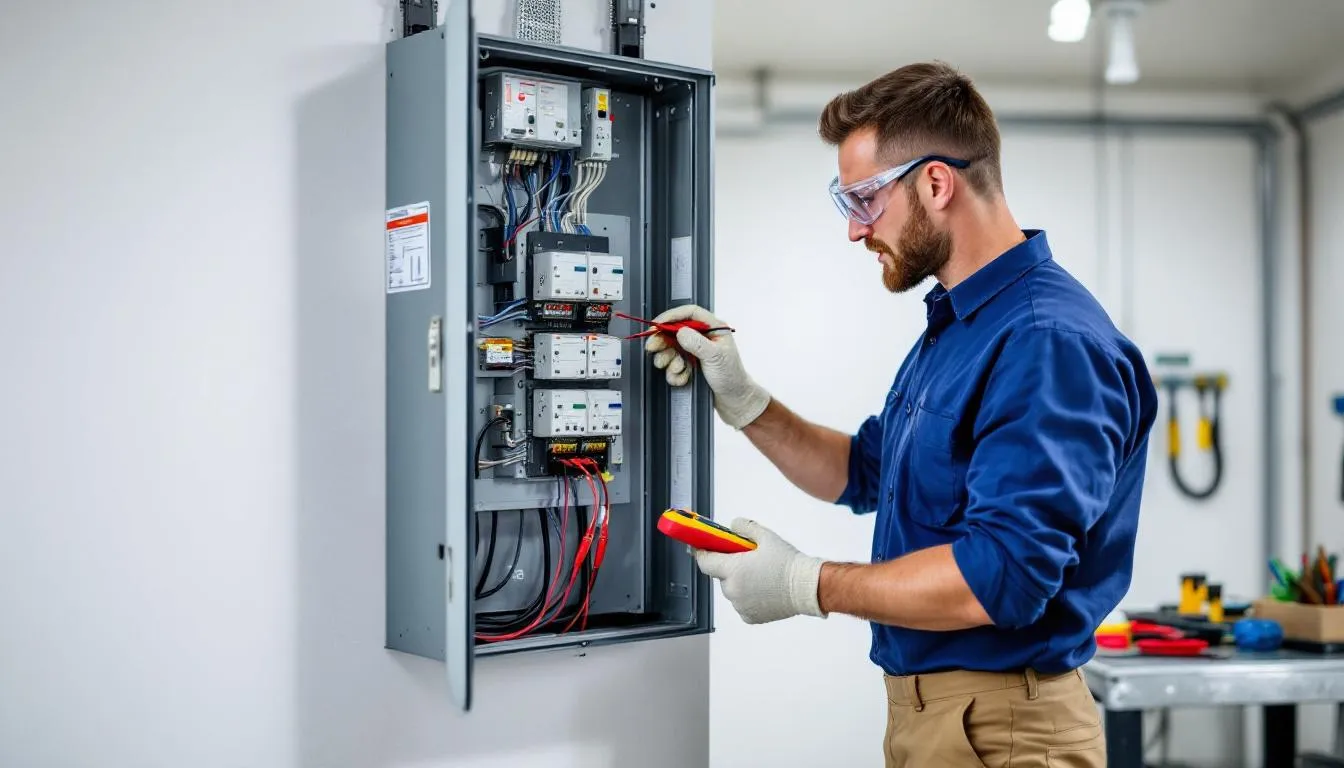
Check grounding and bonding. In the primary panel, neutral and ground are bonded. In subpanels, they are separated. If you see a green bonding screw set up in a subpanel, that is normally wrong and must be electrical panel replacement removed. If you see bootleg grounds, where a jumper ties neutral to ground on a receptacle, strategy to repair the circuit properly.
Why Breakers Trip, and What That Tells You
A breaker trips for three primary factors: overload, short circuit, or ground fault. Overload implies the amount of loads on that circuit exceeded its ranking for long enough to warm the breaker's bimetal aspect. Hair dryers and area heating units plugged into the exact same 15-amp circuit will do that. A brief circuit is a direct connection in between hot and neutral or in between hot and ground, and it trips instantly with a sharp pop. A ground fault is a leakage course from hot to ground, often through water or the human body, and a GFCI will catch it at really low currents.
On the task, I ask 2 concerns: what altered, and does the breaker reset and hold? If a breaker journeys after you included a treadmill in the bedroom, that is a load concern. If the breaker will not reset, you likely have a fault that persists and requires troubleshooting with the circuit de-energized. An arc-fault journey in some cases indicates a loose double-crossed receptacle connection. Move the conductors to the screw terminals and the intermittent arcing stops.
If a breaker trips repeatedly without an obvious cause, feel it after it cools down. Warm is normal under load. Hot to the touch recommends a stopping working breaker or poor bus contact. In any case, do not keep resetting a misbehaving breaker without examining. Breakers are security devices, not suggestions.
Planning for New Loads: EVs, Heat Pumps, Induction Ranges
The electrical panel is usually the traffic jam when people energize appliances. A 50-amp EV battery charger, a 40- or 50-amp induction variety, and a 30- or 40-amp heatpump air handler can chew through capability on a small service. The best method is a load computation. You list fixed home appliances, apply need elements for cooking and basic loads, include the largest heating or cooling load, and compare to the service rating.
If the numbers reveal minimal headroom, you have choices. One is a service upgrade, moving from 100 to 200 amps with a brand-new meter base, service conductors, and main panel. Another is a wise panel or a load management device that temporarily sheds a hot water heater or dryer while the EV charges. I have actually installed several setups where a 50-amp EV charger is enabled to run only when the oven is off. The property owner never ever notifications, and the service never exceeds its limit.
Sometimes, the most affordable option is to choose a smaller EV charging rate. Dropping from 50 amps to 32 amps minimizes charge speed however fits within the readily available capability. Or you may run a 20-amp 240-volt circuit and utilize a portable EVSE. A nuanced discussion about practices and priorities normally finds a path without overspending.
Safety Essentials for Homeowners
You can do numerous jobs around an electrical panel securely without opening it. Keep the location in front of the panel clear for at least 3 feet so you can access it rapidly. Keep the directory site precise and understandable. Listen for buzzing or sizzling, which can indicate a loose connection. If the panel is in a damp location, control humidity and repair leakages. Rust on the enclosure often suggests moisture inside, which shortens the life of breakers and bus bars.
If you need to replace a breaker or add a circuit, treat that as licensed work unless you are really comfy and qualified. Even with the main breaker off, the service conductors feeding the primary lugs are live. That is not a place to find out on the fly. Likewise, many jurisdictions require licenses for electrical work, and your insurance provider anticipates that upgrades are inspected.
There is one property owner task I suggest: work out the primary breaker once a year, if the maker allows it. A quick off and on clears dust and ensures it is not frozen. Do it in daylight with a flashlight prepared, and shut down sensitive electronics first. If the main feels mushy, binds, or does not reset cleanly, call a pro.
Common Myths and Misconceptions
I typically hear that a 200-amp panel always provides more power to circuits than a 100-amp panel. The fact is subtle. The individual circuits are still protected at their breaker ratings, 15, 20, 30 amps, and so on. The bigger panel simply enables more concurrent load throughout the home without going beyond the service limit.
Another myth is that an old panel is naturally risky. I have actually opened 40-year-old panels that look better than some that are 5 years of ages. Excellent craftsmanship and a dry environment matter more than age alone. That stated, obsolete or recalled devices is worthy of examination, and adding modern-day protective devices to an older system typically yields a genuine security upgrade.
Finally, individuals presume all breakers from an offered brand name are interchangeable, or that a "universal" breaker will fit any panel. Fit is not the complete story. Contact pressure, clip geometry, and listing all matter. I have seen bus stabs burned by an incompatible breaker that seemed to snap in fine. Usage breakers that the label lists for that cabinet.
A Brief Word on Three-Phase and Commercial Panels
Homes generally have split-phase service. Some small stores and multifamily structures have three-phase power. The panel will look similar, however rather of 2 hot legs you will have three phases on the bus. Three-phase panels enable more efficient motor loads and balanced power for business equipment. If you have actually a detached workshop with a three-phase panel, do not presume that property wiring rules use in the very same way. Protection plans, transformer configurations, and conductor colors can vary. Identifying and balance matter a lot more in those settings.
The Expense Landscape
Panel work varies widely in cost depending upon area, permits, service upgrades, and complexity. Switching a like-for-like load center with minor rewiring may run a couple of hundred to a couple thousand dollars. A full service upgrade, consisting of meter base, brand-new service conductors, and coordination with the utility, can land in the mid four figures, often greater if trenching or mast work is required.
The covert cost is often time. Utilities set up disconnects and reconnects on their schedule. Permits and examinations add steps. A seasoned electrical expert will stage the job to reduce downtime. I have actually done upgrades where the power was out for just four hours since materials were prepped and labeling was done in advance. Good planning pays for itself.
Signs of a Well-Installed Panel
Walk approximately a panel and try to find hints. The enclosure is square to the wall and flush. Knockouts are tidy, with listed connectors for every cable television. Wires are neatly routed with no sharp bends and enough slack to service a breaker without yanking. Breakers are all the appropriate model for the panel, and the directory reads like a map rather than a riddle. Neutrals are one per hole on the bar unless the label enables two and the conductor sizes match. Ground and neutral are bonded just where they need to be.
I also try to find torque marks on lugs. The majority of contemporary devices defines torque values for terminations. A little paint swipe shows the installer utilized a torque screwdriver or wrench. It is a small detail that prevents many problems.
If You Are Structure or Renovating
Think a years ahead. If you can select a panel, select one with more spaces than you need, 30 to 42 is a sweet spot for numerous homes, and consider a model that supports plug-on neutral and clever breakers. Find it where you can service it easily. Avoid closets, restrooms, and tight corners that restrict the required working clearance. If you anticipate solar, batteries, or a standby generator, prepare for interconnection with a bus ranked to handle backfeed and devices that supports the required breakers and disconnects.
Coordinate the huge loads early. An induction range, heat pump hot water heater, and EV charging do not need to clash if you plan circuits with variety and, where helpful, load management. Running conduit to the garage throughout a remodel costs little and keeps choices open.
Troubleshooting Stories That Teach
A townhouse had intermittent power drops on half the circuits. We discovered a loose neutral lug in the panel, which produced flicker and unusual voltage swings on 120-volt circuits. Tightening the lug fixed the instant problem, but we likewise inspected every neutral connection in the branch circuits. A drifting neutral can cook electronics. That case taught the owner why neutrals are not passive wires you can ignore.
Another home had a basement panel that tripped a dual-function breaker every couple of days. The culprit was a staple driven too tight into a cable as it passed through a stud. The staple had nicked the insulation, creating a barely-there arc when humidity increased. Replacing the damaged area and re-stapling properly fixed it. The lesson: the breaker was doing its task, and mindful physical setup matters as much as sizing.
A garage subpanel kept tripping when both the air compressor and the table saw ran. The feeder was sufficient, but the subpanel had its neutral bonded to the case, and neutral current was returning on the equipment premises. Correcting the bonding and rearranging loads by phase balanced the system and ended the nuisance journeys. Seclusion in subpanels is not a scholastic rule, it alters how current flows.
Glossary of Helpful Terms
-
Service conductors: Wires that bring power from the utility to your meter and primary panel.
-
Main breaker: The primary detach that shuts down power to the panel.
-
Bus bar: Metal strip that disperses power to breakers, also the location where neutrals and premises terminate on their particular bars.
-
Branch circuit: A circuit that runs from a breaker to outlets, lights, or equipment.
-
GFCI/ AFCI: Specialized security that trips on ground fault or arcing conditions.
-
Subpanel: A secondary panel fed from the main, with separated neutral and ground.
These definitions may feel apparent after you have hung around around panels. For newcomers, they anchor the vocabulary, that makes every future discussion with an electrical contractor quicker and clearer.
The Bottom Line for Homeowners
Your electrical panel sets the limits for how your home utilizes electricity. If it is sized right, set up cleanly, and secured with the ideal devices, you acquire security and flexibility without thinking of it everyday. Keep the area clear, keep the labels truthful, and do not disregard recurring trips or heat. When you prepare upgrades, treat the panel as facilities, not an afterthought. A little foresight now will save you cash and headaches when you add that second EV, switch to an induction range, or complete the basement.
If you take nothing else away, remember 3 practical practices. Know where your main breaker is and how to operate it. Keep the directory site precise. And if anything about the panel looks or sounds wrong, get it checked. The electrical panel is peaceful the majority of the time, but when it speaks, it generally has something important to say.